
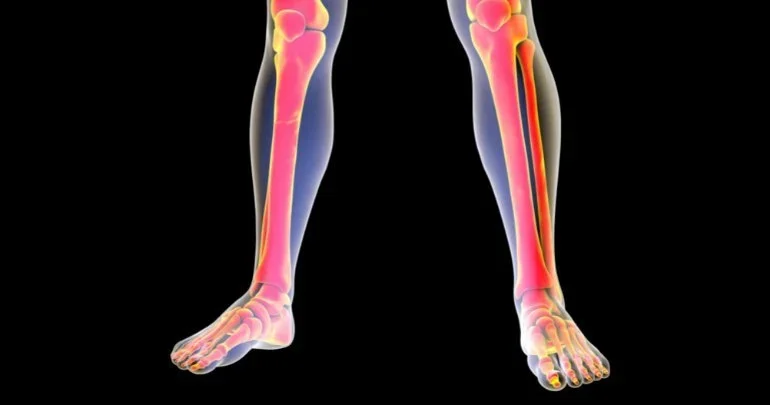
The ankle bone is really connected to the knee bone and everything else via the fascial web.
A woman presented with issues in her right leg. She had plantar fasciitis, right knee pain, and right hip pain for a number of years and had seen many providers without positive results.
In the past, I would have worked the hip area first and then down to the ankle and foot. Recently, I have had better results starting with the foot and working up the leg. Since many fascial strains can start from the feet, I began with her plantar fasciitis condition.
The first visit resulted in nice releases in the arch. The second visit focused on deeper arch tissue. She was also exercising the area with a golf ball at home.
At the third visit, she was feeling some improvement in that foot, knee, and hip. I continued therapy deeper in the arch. By the fourth visit, I could not feel any strain in the arch.
But there was still strain in her ankle that required therapy. Interestingly enough, her knee and hip were improving at the same time as she was walking the hall during the visit.
I have seen foot fascial strains extend all the way into the head with other patients. One of our key tenets is that any area in the fascial web can pull on any other area.
If I do not get complete resolution in the knee and hip pain, I would refer her to a massage therapist for deep tissue work. Sometimes the larger muscles can be a pain factor for adults.
When we work with patients, we always need to connect the body's dots in space and time. Gillespie Approach Training can help providers be successful for patients with difficult problems.
