Atlas Chiropractic can make a difference for some patients, but I believe there is much more to the story of dis-ease.
A thirty-two-year-old man presented with neck pain, headaches, and lower-back pain. He described himself as “tight.”
His history was typical except for one defining event: The umbilical cord was tightly wrapped around his neck at birth and minutes passed before he took his first breath.
Since the fascial web remembers a lifetime of strain, I believed this trauma was probably the root cause of his tightness. He presented with a zero-second brain cycle and a tight neck, both hallmarks of a cord wrap.
He had a history of neck issues since childhood. Having tried every type of therapy, he finally found relief with an atlas chiropractor.
He had to make a six-hour roundtrip out of state for those precise adjustments. He found that when his symptoms worsened, he needed to make another trip. It was not the best scenario, but it kept him functional.
He had deep neck fascial strain extending down into his lower back. Following his body into a distinct trunk twist, I felt his brain cycle open to a great 80 seconds on the first visit.
Over the next three visits, I worked with his neck and pelvis to the point where he felt unusually good. After a recent snowstorm, he cleared seven neighborhood driveways and felt no ill effects—something unheard of before this therapy.
His brain cycle opened to a terrific 270 seconds, while feeling that his mind was clearer. I believe that as therapy progresses, he will continue to improve.
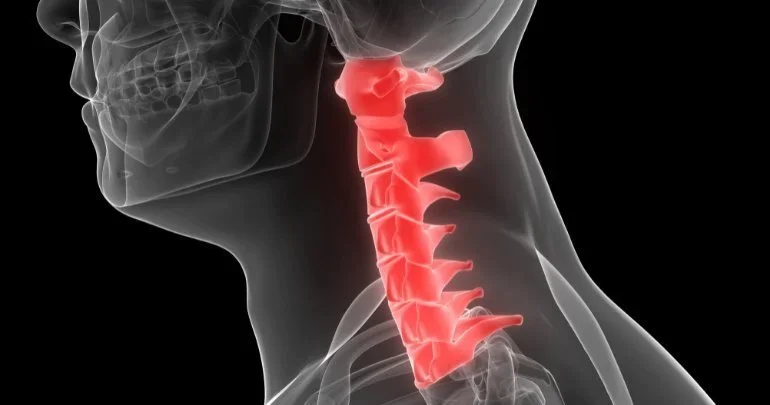
There is no question that the occipital-atlas-axis relationship needs to be optimal. But I believe this is just a part of the structural health equation.
The craniosacral fascial system encompasses the bigger picture:
- There was no consideration that his cranial tissues were tight and its ramifications.
- There was no consideration that his sacrum was tight and its ramifications.
- Most importantly, there was no consideration of the fascial strains in his body and their ramifications.
In therapy, I felt that all of his major strains led to his atlas. In that context, one could see how that bone had been in a precarious position.
The fascial web even includes all of the bone cells of the atlas. One could say that the balancing act of the pressures in his web had to influence the position and function of his atlas.
I am not trying to single out the good work of atlas chiropractors. My desire is that all healthcare practitioners include the function of the craniosacral fascial system as part of their therapy.