
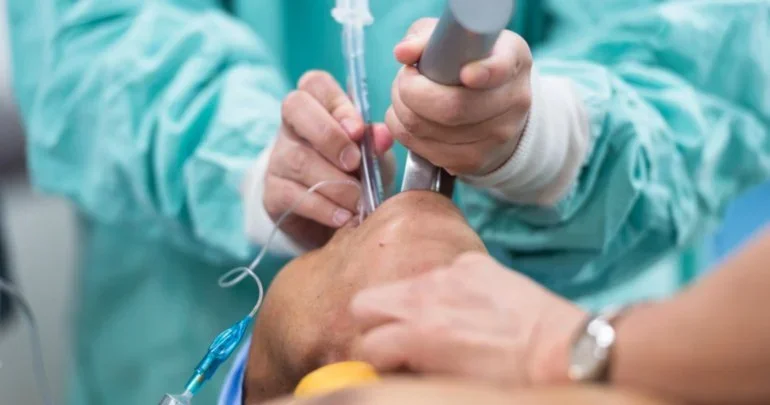
About twenty years ago, a man presented with unexplained headaches. They started right after he had a hospital surgical procedure.
He had a zero-second brain cycle, but I found that he had an unusual amount of throat fascial strain. I discovered that his doctor intubated him for the procedure.
I hypothesize that the tube created unseen fascial strain in his throat, which tightened his cranial meninges and, ultimately, resulted in his headaches. Therapy resolved his problem nicely, and another great discovery, unnoticed by the medical profession, was made.
Recently, a five-year-old boy presented with anxiety, emotional impulse control issues, and teeth grinding. His mother said that he was always in a flight-or-fight state with nervous system dysregulation.
Ever since I started my practice 50 years ago, I have always wondered why some young children grind their teeth. Since they were not married, had no jobs or children, and had everything in their lives taken care of, what were the stressors?
Over the years, I discovered that they had excessive fascial strain in their throat and jaws from physical causes like umbilical cord wrap. I hypothesize that they were trying to release this tension by grinding their teeth.
He had a rough start in life with open-heart surgery on his second day. He almost died, but the doctors saved him.
He had three more surgical procedures within a month, each requiring intubation. Mom said the botched last one caused damage to his left vocal cord.
He presented with a zero-second brain cycle and a very tight throat and neck. I hypothesize that the cumulative intubation traumas created fascial strain in his throat, the zero-second brain cycle, and his current conditions.
During the first session, his brain cycle opened to 70 seconds as his throat fascial strain started to nicely release. His mother said he was speaking more after the visit.
The second visit resulted in more fascial release as his brain cycle opened to 120 seconds. As always, I expect a good outcome with further therapy.
The medical model needs to look at the possible hidden side-effects of intubation. Gillespie Approach Training can give providers a great tool to help their patients.
