Orthodontics is much more than creating nice smiles for the wedding album.
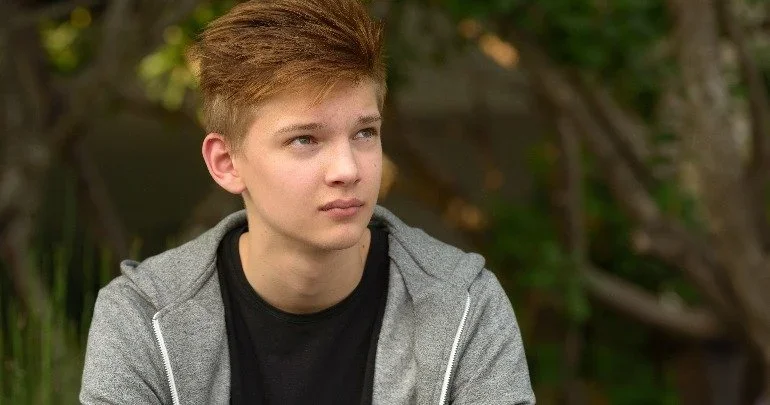
When a fourteen-year-old boy wakes up every morning, his left jaw pops. He has had a stuffy nose and continuous colds for over a year that he cannot shake.
It hurts for him to eat. He had earaches at three years of age.
He started orthodontics with a palatal expander at nine, then graduated to braces, and now wears a palatal retainer 24/7. Two important considerations jump out at me.
The first is that conventional orthodontics is not compatible with the Gillespie Approach. All three modalities mentioned above can severely restrict the craniosacral fascial system.
When I checked him with his maxillary retainer snapped into place in his upper jaws, his brain cycle was at zero seconds—ouch. Just by removing it, his brain cycle opened to 70 seconds—night becomes day.
I am assuming that four years of orthodontics had tightened his sinuses and face. As healthy young man, his “colds” were most likely rooted in the fascial restriction of his sinus and facial bones.
The second issue is the bilateral TMJ clicking, a more serious problem foreshadowing possible headaches, jaw pain, and more problems in adulthood. All too often, I see patients who had their teeth straightened nicely without orthodontic regard of their mandibular position to their cranium.
I believe that his lower jaw was not lining up correctly to his skull. Since I am a retired dentist, I referred him to Dr. Joanna Walska in Newtown, Pennsylvania, for radiographic studies and further orthodontic care.
In the meantime, I plan to see him as a massage therapist for the soft tissue work. In a perfect world, he would have gotten Gillespie Approach therapy first to be strain-free, chiropractic care next to get his osseous structures in alignment, then started orthodontics with the dentist keeping an open brain cycle in mind.
The best solution would have been therapy at birth. Birth providers so need Gillespie Approach Training for all of their newborns.