
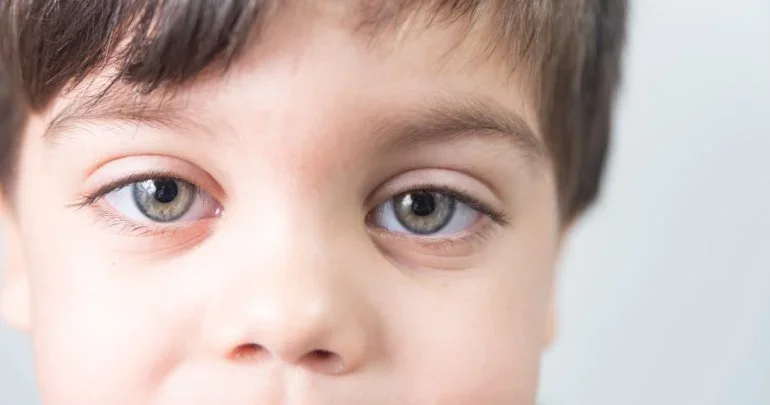
Strabismus can be grouped with other head and neck issues caused by the same fetal fascial strain.
A young lad presented with a difficult infant history, having experienced torticollis, plagiocephaly, a neck tilt, and strabismus. Most therapists can perceive the anatomical connection between the first three, but the inclusion of strabismus can be a cognitive stretch.
Since the craniosacral fascial system connects all the cells of the body, a platform now exists that can include many seemingly unrelated conditions. Some birth traumas can happen at labor and delivery, but these four are consistent with fetal life.
When we did our Lancaster infant research, we originally thought in-utero life was a breeze. But after we saw a number of challenged cesarean section babies, that view dramatically changed.
The biggest problem appeared to be an extended compressive force on the growing fetal fascial web that created pathological extension (arching), flexion, or twisting strains. The fetus survived in utero, but in the outside world, those strains hampered the body's function and became problematic.
This four-year-old presented with a neck arch and twist in therapy. The original therapist did a nice job with the plagiocephaly, torticollis, and neck tilt, but he still had strabismus.
After the first visit, mom and even dad noticed better eye alignment. After the second visit, his neck released what appeared to be the rest of the strain pulling on his eyes. I told mom to monitor him at home to see if he needed another visit.
If the fetal head and neck are stuck in a compromising position for an extended period of time, fascial strain can pull on the eyes, sinuses, teeth, jaw bones, ears, and other cranial structures to cause problems.
During the release of the tissues in therapy, the skin on the child’s face may become quite red. I theorize that the superficial layer of fascia, directly below the epidermal layer, is in play.
The beauty of the Gillespie Approach is that the function of the craniosacral fascial web presents a different way of thinking about disease. It allows the provider to discover answers to conditions where conventional thinking falls short.
The ultimate solution would have been to check and treat him at birth to mitigate the strains after the injury. I believe that providers with Gillespie Approach Training can prevent so much suffering in the world.
