

When describing someone in the medical field who helps people, we often use the phrase “health care professional.” This broad term does not accurately describe the unique practice of Gillespie Approach providers.
Being in the healing business, we are “facilitators of authentic healing.” We help people heal by revisiting and clearing their past physical and emotional traumas so that their bodies can function better.
We take patients on a journey inside of themselves in space and time to discover the root of their problems. Often craniosacral fascial restrictions play a major role in their conditions.
We listen for fascial strains in their bodies and allow the tissues to release to promote healing. Once the brain is expanding and contracting well and the fascial web is free, the other body systems can function more optimally.
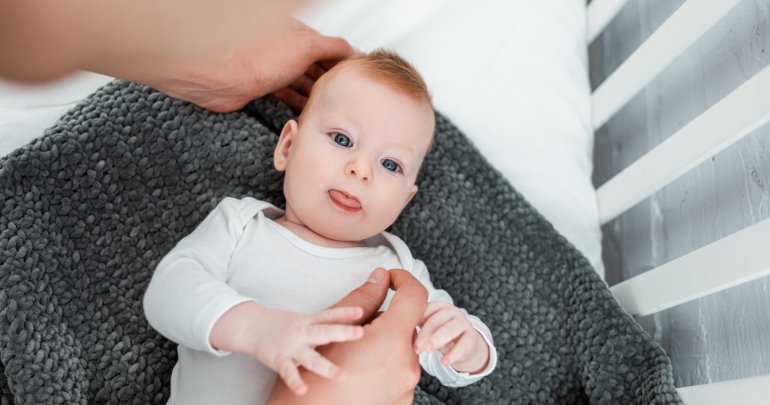
A forgotten part of the equation is birth trauma—what happens during those 40 weeks of fetal life, labor, and delivery. As a student of Dr. William Sutherland, the founder of the cranial concept, Dr. Viola Frymann taught me the principles of cranial osteopathy in 1980.
Her landmark research paper in the 1960s showed that 88% of 1,250 newborns born in a Midwestern hospital had craniosacral restriction from birth trauma. (Frymann, V. Relation of disturbances of craniosacral mechanisms to symptomatology of the newborn: Study of 1,250 infants. Journal of American Osteopathic Association 1966; 65: 1059–1075.)
Since the craniosacral system is an integral part of the entire web, fascial strains due to birth trauma can drive that percentage even higher. So it is safe to assume that almost all neonates will present with some strain in their craniosacral fascial system.
My goal is for birth providers to use Gillespie Approach Infant Training skills to best mitigate those restrictions as a preventative health measure.