

As a new medical concept, fascial restriction within the cells of an organ may possibly affect its function to predispose a patient to a disease.
A healthy young man presented with chronic pain in his left shoulder blade and right hip areas. He had his appendix removed when he was eight years old. He also has had type 1 diabetes since he was four.
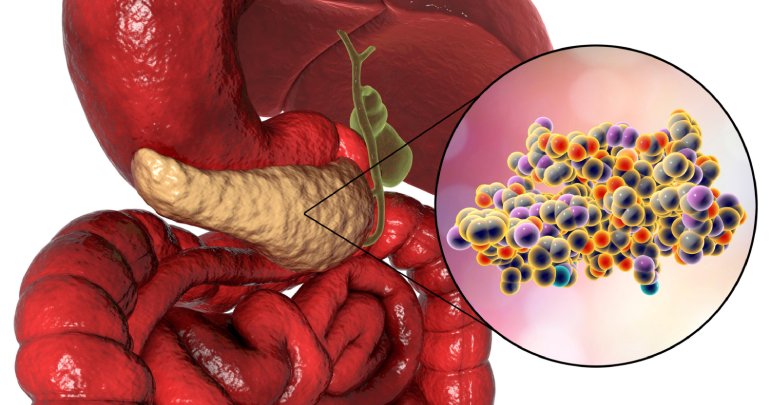
I discovered a fascial strain traversing from his right hip and appendix area to his left ribcage and scapula area. His pancreas was in that general line of restriction.
Maybe birth trauma created and the surgery later added fascial restriction in his pancreas that altered its function and created the type 1 diabetes. One can ask the question: Can patients with fascial pancreatic restriction possibly be predisposed to other diseases like pancreatitis, type 2 diabetes, and/or cancer?
When we think of fascial tightness, we do not usually consider organ involvement, function, and pathology. Instead, we think of releasing and realigning structural tissues like muscles and bones. Since the fascial web connects every cell of the body, every organ is in play when strains are passing through the body.
One organ that can demonstrate a positive change to therapy is the eye. The release of fascial strain in the eyes and in the fascial web pulling into the eyes can dramatically return them to normal function. My story here is the perfect example. If the eyes can correct from birth trauma, we would expect other organs to respond accordingly.
Another organ is the heart, where the Gillespie Approach has been successful for patients with murmurs and atrial fibrillation. What about other organs like the thyroid gland, liver, and kidneys, which all have important functions necessary for life? It would make sense that these organs need to be strain-free to work optimally.
When we treat newborns and infants, as a bonus, the happy baby outcome may include organs attaining optimal function. It is a common-sense hypothesis, and the scientific answer will unfold in time.
Gillespie Approach Training can unlock the healing door for patients.